
A homeowners guide to subsidence
Posted 14 Nov 2025
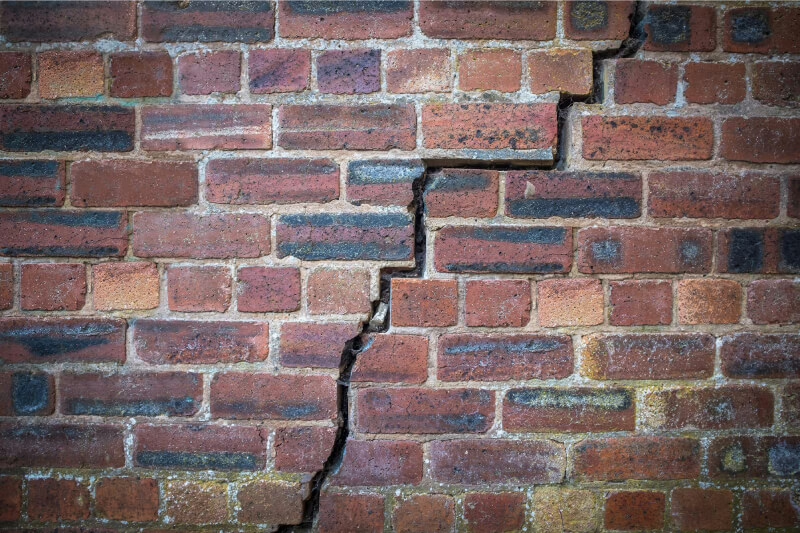
Subsidence is like pulling one card from the bottom of a house of cards — the whole thing starts to tilt if you don’t act quickly. It often starts with small, easy-to-miss signs — a crack in the wall or a door that sticks — but ignored for too long has the potential to cause serious structural damage that can be expensive to fix. Spot the signs early and you have the best chance of maintaining your home’s stability and value.
Of course, sometimes a crack in your wall is just a crack and a cosmetic flaw; but unfortunately, it is also the most common first sign of subsidence. Easily mistaken as minor settlement, cracks caused by subsidence can lead to significant property damage. If you suspect your property might have subsidence this guide will help you spot the signs, understand the causes and decide on the best course of action.
What is subsidence?
The literal meaning of subsidence is the downward movement of the ground underneath a building, causing structural damage to the property. Every new build will experience minor settlement to some degree as it naturally settles into its foundations, but subsidence is where the movement continues and eventually leads to severe long-term issues, such as cracks in walls and foundations, uneven floors and misaligned doors and windows that don’t open and shut properly.
Common causes of subsidence
- Soil type and moisture content: Buildings on unstable soils are most at risk of subsidence. Clay soils move as they shrink during dry spells and then swell again when wet. Unsurprisingly, sandy and peat soils are also prone to subsidence due to their innate instability.
- Leaking drains and underground pipes: A constant flow of water will eventually wash away supporting soil, ultimately causing erosion and subsidence.
- Tree roots and vegetation: Large trees have large, far-reaching roots that absorb all the moisture from the soil, causing the soil structure to shrink and move downwards. So, if this happens in close proximity to your property the risk of subsidence is high.
Signs of subsidence
Knowing that early detection goes a long way in minimising damage, here’s what to look out for:
Internal warning signs:
- Cracks that run in a diagonal direction, usually wider at the top and often found around doors and windows.
- Distorted door and window frames: You may notice that they are tricky to open and close.
- Sloping floors: Floors that are noticeable uneven and feel wonky.
- Rippling wallpaper: Wallpaper that is starting to wrinkle and ripple is one of the more subtle signs of wall movement and subsidence.
External warning signs:
- Cracks in masonry: Cracks in brickwork or render that extend downwards towards the foundations.
- Separation of extensions: Gaps appearing between an extension and the original main building it is attached to.
- Leaning structures: Not just the property, but also garden walls, fences and loose paving.
The difference between subsidence and settlement
Most properties will experience normal settlement such as hairline cracks, which are regarded as minor and eventually stop or reduce once the building settles into its foundations. Subsidence is different because instead of settling to find a stable position, the soil beneath the building is physically moving downwards creating wider, more serious cracks that continue to worsen over time.
Effective prevention of subsidence strategies
- Drainage:Maintenance of drains, gutters and downpipes will help avoid water collecting near the foundations.
- Tree and vegetation: Tree roots drink moisture from the soil leading to soil shrinkage and subsidence, so best to plant trees away from the foundations, and any that are close by, keep well pruned.
How to repair subsidence
- Keep records: Document everything, take photos and measure cracks so you can monitor their growth, or stability, over time. This will also help with professional evaluation and insurance claims if needed.
- Speak to a structural surveyor: The best way to get an accurate diagnosis is to hire a qualified structural surveyor to carry out an in-depth evaluation.
- Check your home insurance: Most insurance policies will cover subsidence but be aware it’s not unusual for there to be some exclusions that may apply.
- Engage qualified professionals: Your structural survey will reveal if subsidence is a problem, and if you do, you may need a structural engineer or geotechnical expert to assess the soil and underlying issues.
Subsidence insurance
Many home insurance policies offer subsidence cover, but in varying ways. For example, you might find damage caused by tree roots is excluded, or they may charge a higher excess for subsidence claims.
If subsidence is suspected and you need to make a claim:
- Contact your insurer: As soon as you suspect subsidence you should notify your insurer, even if it is still to be confirmed.
- Investigation: The insurer will want to make their own assessment of the problem and may appoint a loss adjuster and/or a structural engineer to carry out their own inspection of the property.
- Repairs: Once subsidence is confirmed, they will determine the best course of action, considering repairs such as underpinning or resin injections. The cost of repairs, minus your excess, will usually be covered by the insurer.
Remedial actions to fix subsidence
There are several options to help stabilise the ground beneath your home:
- Underpinning: Probably the most known method that comes to mind, underpinning means strengthening and extending the foundations deeper into more stable soil.
- Resin injection: Less invasive and which often means less labour intensive, the resin is injected directly into the soil to stabilise it, giving almost immediate results and preventing further subsidence.
- Soil stabilisation: If the subsidence is minor there are other ways to stabilise soil such as compaction grouting which will prevent further ground movement.
Can subsidence be fixed without underpinning?
Depending on the cause and severity of the problem, subsidence repair can be achieved without underpinning. For specific causes there are alternative treatments to avoid full-scale underpinning, such as resolving drainage issues, improving soil stabilization, repairing leaking pipes, tree root management, moisture control and resin injection. The key is to identify the root cause early and understand what is causing the cracks in walls or the uneven floors, and the best way to do this is to request a professional subsidence survey. Acting fast will go a long way in saving money and avoiding expensive repairs.
Selling a house with subsidence history
Many people think selling a house with subsidence will be a problem relative to selling one without any subsidence issues – but it doesn’t have to be. Honesty is the best policy and homeowners looking to sell a property affected by subsidence should be transparent with structural repairs details, underpinning and insurance history. Indeed, there are many cash house buyers and property investors who prefer to purchase houses with structural issues – with no mortgage to arrange they can negotiate and complete quickly. If you’re looking for a fast cash sale or aiming to sell your subsidence-affected home, sharing a recent subsidence survey or engineer’s report will help to build trust and can make all the difference.
Conclusion
It’s clear that subsidence is a serious issue for homeowners, but remember it is manageable, especially if detected early. By taking preventative action, spotting the signs early, finding the cause and treating appropriately your home can last for many years to come. If you’re still unsure, get in touch with DSA and we’ll guide you through your next steps.


